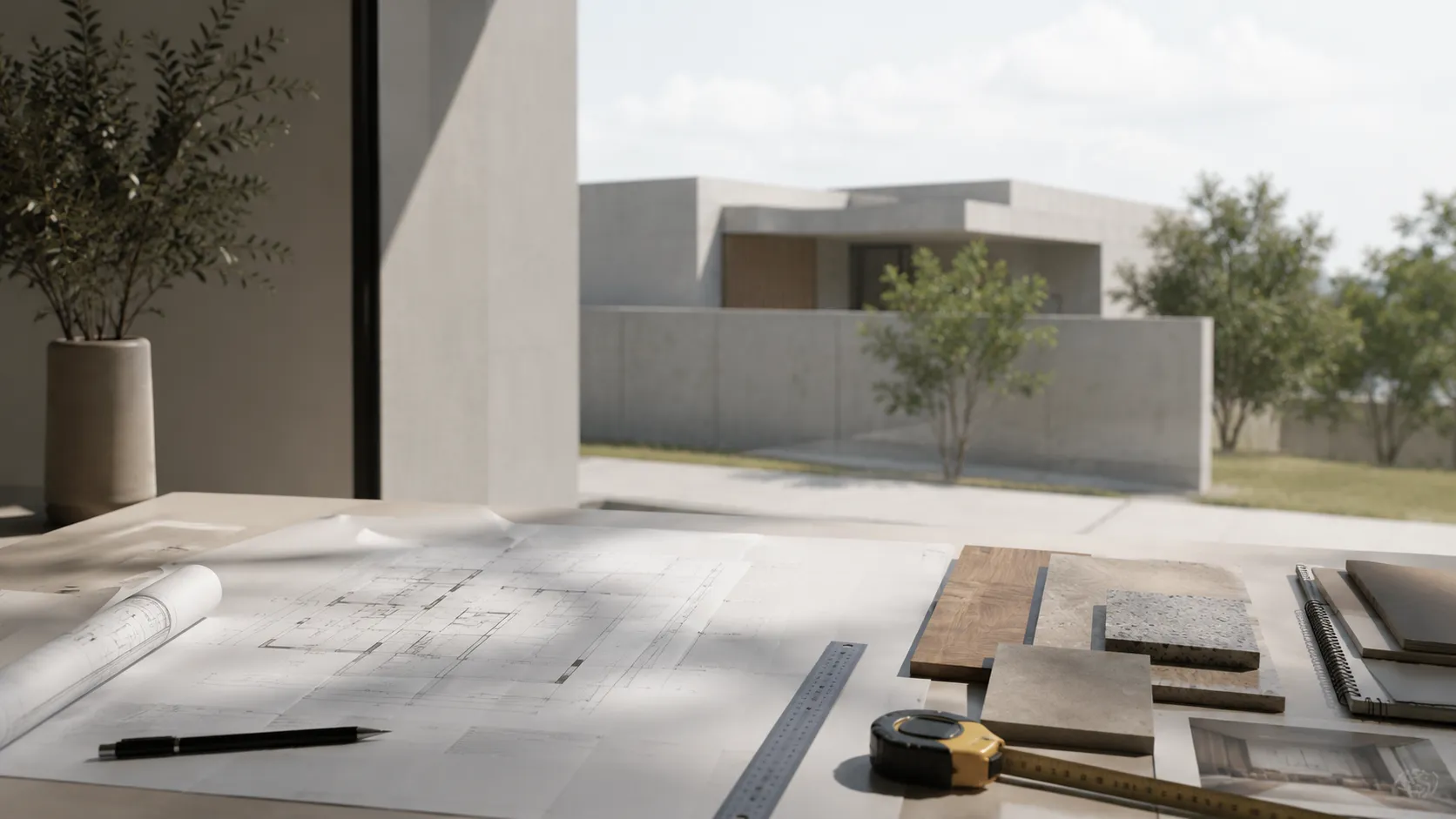
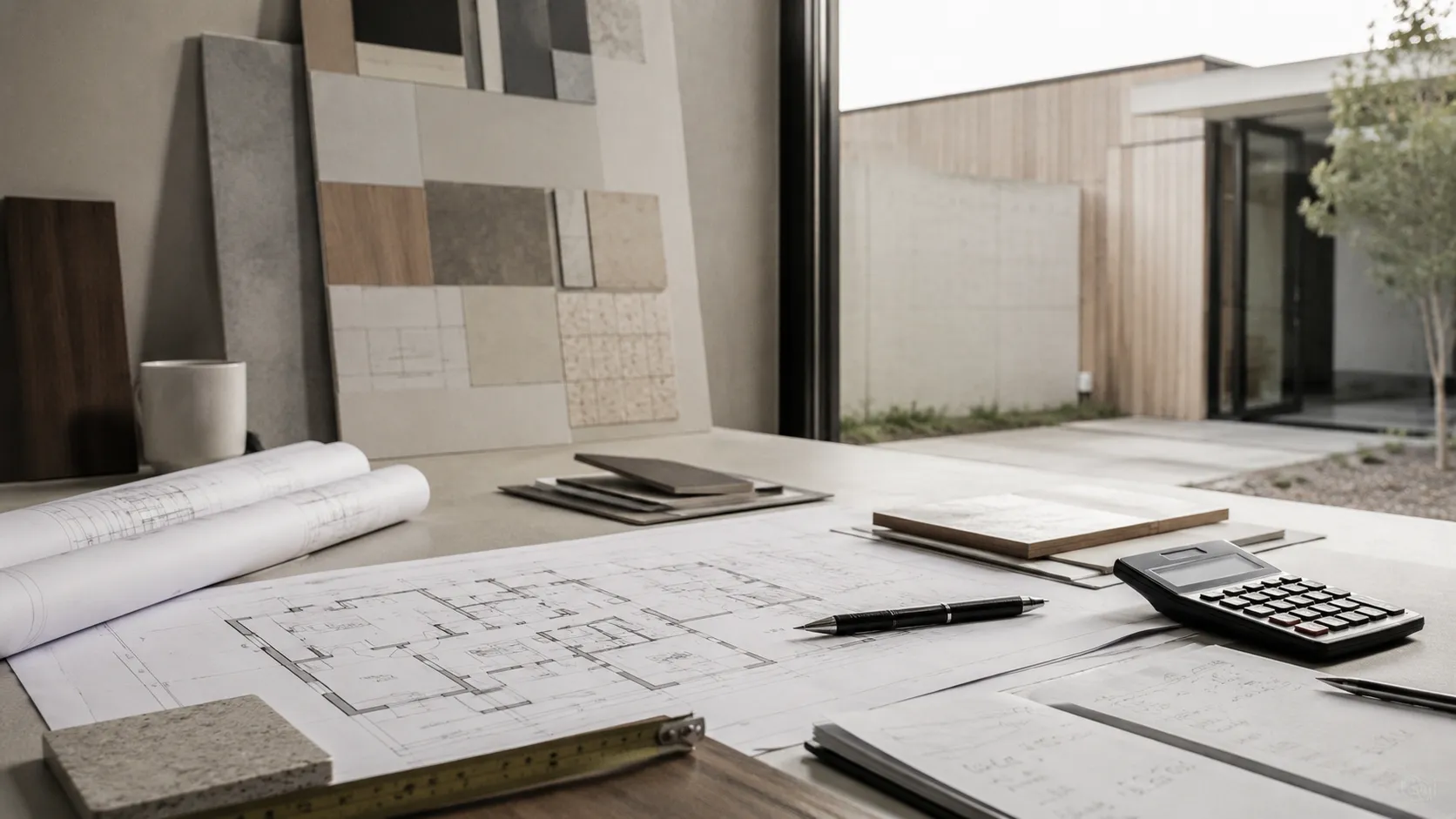
At the market, we are all good at haggling. Look at the item, pick it up, ask the price, offer half, and pretend to walk away.
The trouble is that building a house is not shopping at the market. The goods do not exist yet. All that exists is an idea in your head, and the price of an idea can only be estimated, not haggled over.
That is why, before requesting a formal quotation, there is a middle step that often gets skipped: the early estimate. This is where the conversation about cost starts to have something to stand on.
An early estimate is a rough map, a formal quotation is the full route
The two are often treated as the same thing, but they do different jobs. An early estimate answers the question, "will this roughly fit my budget or not?" A formal quotation answers, "exactly what will be built, and what will it cost?"
Early estimate | Formal quotation | |
|---|---|---|
Purpose | Judge budget feasibility and project direction | Basis for deciding to start the work |
Form of the number | A range | A more detailed breakdown |
Information needed | Basic project information | Full brief, site conditions, and specifications |
When it is used | Early, while you are still weighing options | Once needs and scope are more certain |
It is like a rough map versus turn-by-turn navigation: the rough map is enough to know the direction and approximate distance, but not enough to know exactly where to turn.
5 problems homeowners run into most often when discussing estimates
- Assuming the early estimate is the final price. An estimate is a range because many things are still undecided. A gap between the estimate and the final figure is normal, as long as the reason can be explained.
- Giving sizes loosely. "Around two hundred square meters" could mean the land area, the building area, or both. Without a clear distinction, the estimate drifts off.
- Putting off material decisions. "We'll sort out the tiles later." Yet material choices are among the biggest drivers of cost. Postponing them means the estimate is built on assumptions that may miss.
- Overlooking site conditions. A narrow access road, an old building that must be demolished, or a lot pressed against the neighbors' walls can all change how the work is done and what it costs.
- Not knowing what a single number includes. One estimate already includes permits and exterior works, another does not. Without knowing the assumptions, the two numbers cannot be compared.
All five share the same root: the estimate is read as a number, when it is better read as a number plus its assumptions.
5 pieces of early information that shape the estimate most
This is also the information we suggest you prepare before a consultation:
Information | Why it affects cost | What to prepare |
|---|---|---|
Site size | Area and number of floors determine the volume of work | Land area, estimated building area, and number of floors |
Site conditions | Access and starting condition affect how the work is done | Photos of the site from several angles, access width, any existing building |
Scope of work | The wider the scope, the higher the cost | A list of requested work, such as structure, interiors, garden |
Material preferences | Material choices move the cost considerably | The grade you lean toward (standard, mid-range, or premium) |
Target timeline | A tight schedule can change how the work is organized and staffed | When you want to start and finish, and why |
6 tips to make the estimate discussion faster and less confusing
- Separate land area, building area, and number of floors from the start. Always state these three numbers together so nothing is misread.
- Prepare photos and measurements of the site. Photos from several angles and a rough idea of the access width already help a great deal, even before technical drawings exist.
- Decide the material grade first, the brand later. You do not need to name brands. Just decide whether you lean toward standard, mid-range, or premium, and the details can come later.
- Ask about the assumptions behind the number. What is included and what is not: permits, interiors, furniture, exterior works, and a contingency fund for the unexpected.
- Ask for the estimate as a range, together with the factors that could move it. Ask what could push the figure up or down. The answer usually shows how well the contractor understands your project.
- Move on to the brief and the RAB. Once the early estimate feels reasonable, prepare a fuller project brief, then request a RAB (Rencana Anggaran Biaya), the itemized cost breakdown. Our guide is in How to Prepare a Construction Project Brief. If you are still weighing whether to renovate or build new, also read Renovate or Build New.
If there is something you do not know yet, that is fine. Write "not sure yet" in that spot. A good contractor will help you fill it in.
For architects and facility managers, an early estimate helps keep things on course
For architects, an early estimate helps clients weigh concepts before the drawings get too detailed, so design and budget move in the same direction.
For organizations or agencies planning an operational facility, an early estimate is a useful basis for drafting a budget plan and schedule before moving to a more formal quotation process.
How we discuss estimates at Cabima
We start from whatever early information you have, then ask about anything unclear. Once the direction feels right, we put it into an itemized RAB from the start, so you can see where each figure comes from.
Once the project is underway, we send a progress report every two weeks, help arrange permits such as the PBG (Persetujuan Bangunan Gedung, the building approval permit), and offer a 3-month workmanship (finishing) warranty and a 1-year leak warranty.
Frequently asked questions
What is an early estimate for a construction project? An early estimate is a cost projection given as a range, built from basic project information before a formal quotation is prepared.
Is an early estimate the same as a formal quotation? No. An early estimate helps judge budget feasibility, while a formal quotation is more detailed and prepared once needs and scope of work are more certain.
Why is an early estimate a range rather than an exact number? Because at the early stage many things are not final, such as material choices, design details, and site conditions. A range gives an honest picture of that uncertainty.
What information should I prepare before a consultation? Site size, site conditions, scope of work, material preferences, and target timeline.
Can the estimated figure change? Yes. Changes usually come from new information or changed decisions, such as materials or scope. That is why the assumptions behind the figure should be written down.
How can I discuss my project estimate with Cabima? Message us on WhatsApp at +62 813-1515-1881, or visit our office at Kompleks Rukan Sunter ICON, Sunter Agung, North Jakarta.